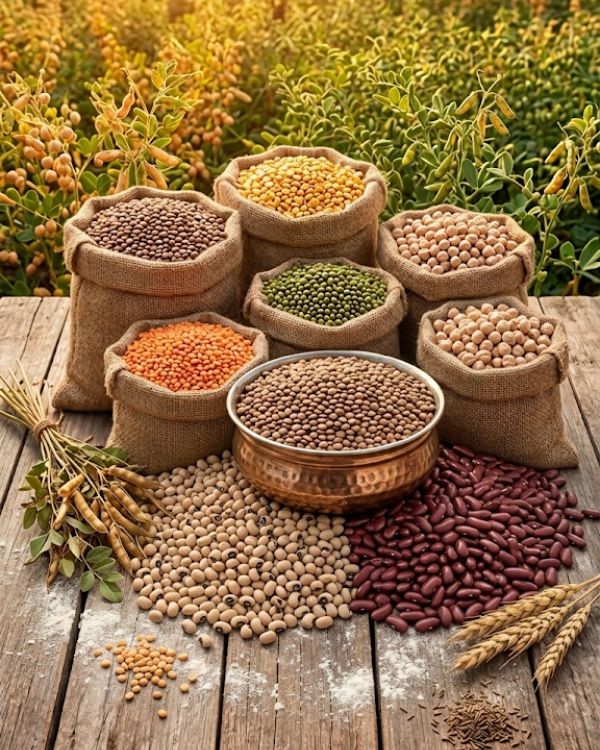
Based on the diverse variety of dals (pulses) shown in the image and their universal characteristics as a food group, here are the key features of the dals themselves, focusing on their benefits, culinary properties, and nutritional value, rather than a description of the photograph:
Nutritional Powerhouse
-
Plant-Based Protein: Dals are a vital, low-cost source of complete protein, especially essential for vegetarian and vegan diets. They contain amino acids that are foundational for muscle health and body repair.
-
High in Dietary Fiber: They are incredibly rich in fiber, both soluble and insoluble. This aids significantly in digestive health, promotes a feeling of fullness (satiety), and helps to stabilize blood sugar levels.
-
Essential Vitamins and Minerals: Dals are naturally packed with critical nutrients, including:
-
Folate (Vitamin B9): Crucial for cell division and particularly important during pregnancy.
-
Iron: Key for oxygen transport in the blood and preventing anemia.
-
Potassium & Magnesium: Vital for heart health and nerve function.
-
Low in Fat and Cholesterol-Free: As a plant food, they contain very little fat and are naturally cholesterol-free, making them excellent for heart health.
Culinary and Textural Versatility
-
Varied Textures: From the creamy, smooth consistency of split red lentils (masoor) to the robust, earthy bite of whole chickpeas (chana) or kidney beans (rajma), they offer a spectrum of textures to suit different dishes.
-
Flavor Profiles: While generally having an earthy base, dals can be nutty (arhar/toor), subtly sweet, or robust, readily absorbing the spices and aromatics they are cooked with.
-
Adaptable Uses: They are the foundation of countless dishes worldwide:
-
Comforting Stews and Curries: Like classic Indian dal tadka or sambhar.
-
Hearty Soups and Casseroles.
-
Salads and Sides: Whole dals can add substance and protein.
-
Flours and Batters: Ground dals are used for besan (chickpea flour), dosas, and savory snacks.
-
Sprouts: Whole mung beans and others can be sprouted to enhance nutrient bioavailability and add a crisp texture to dishes.